
The Society for Military History
In 1896, U.S. Army Colonel B. J. D. Irwin, a retired Assistant Surgeon General of the Army, planned a meeting in Chicago for veterans of the Plains Indian Wars. Irwin brought these men together to build on the examples of previous war veterans who set up military lineage societies. By the end of this meeting, Irwin and six other Indian Wars fighters established the Order of the Indian Wars of the United States. Little did these men know that their actions opened the door for the creation of the Society for Military History (SMH), the major international academic society for the study of the history of warfare and militaries.
For almost fifty years, the Order of the Indian Wars held regular meetings where veterans talked about their experiences in the Army and discussed the history and future of the U.S. military. At the same time, the U.S. Army began to recognize the significance of maintaining its organizational history. This realization culminated with the establishment of the Historical Section of the U.S. Army in 1914 to document and study the Army’s campaigns. Nineteen years later, Major C. C. Benson called for the creation of a non-profit history organization that could assist the U.S. Army’s Historical Section. In June 1933, military and civilian archival personnel founded the American Military History Foundation, the precursor of SMH. After five years, the American Military History Foundation began gradually merging with the Order of the Indian Wars and was renamed as the American Military Institute (AMI) until a final renaming to SMH in 1990.
Due to its historic connection as a non-profit to support the U.S. Army’s Historical Section, AMI initially emphasized the study of historic and contemporary U.S. military topics. The American Military History Foundation’s unification with the Order of the Indian Wars allowed the AMI to hold regular meetings for its members as well as special lectures, such as a lecture and discussion held at the National Archives in 1945 titled “The Atomic Bomb and Its Implications” that included the Manhattan Project director General Leslie Groves as a panel participant. The organization also co-sponsored conferences with other associations while regularly holding sponsored panels at American Historical Association meetings. AMI fully expanded outside of its government origins in 1966 when Kansas State University took over the operations of publishing the organization’s journal Military Affairs, which moved to the Virginia Military Institute in 1988 and received a title change to The Journal of Military History the following year.
With the continued growth of the organization, AMI evolved to include military historians from outside U.S. military and government organizations. Similarly, as the organization evolved, the study of military history evolved to expand beyond the battlefields. A review of articles in the Journal of Military History reflect the connections between military history and other subfields, such as women’s history, civil rights, environmental history, and more. In 1990, with its membership and academic fields expanded outside of the United States, the organization rebranded once more as SMH. SMH first sponsored panels and papers at the Northern Great Plains History Conference as the AMI prior to the creation of the conference council in 1987. Since then, SMH regularly sponsored at least one panel in every time slot and eventually provided representation on the council. Throughout its years of participation, the Society for Military History funded awards for a best undergraduate paper and best graduate paper presented at the conference. Additionally, the Society played a significant role in attracting participants from locations far beyond the Northern Great Plains. SMH remains a significant partner of the Northern Great Plains History Conference through its panel sponsorship and continued support for undergraduate and graduate student participation. Today, SMH remains devoted to inspiring and enhancing the study of military history and maintains a membership of more than 3,200 scholars, soldiers, and citizens.
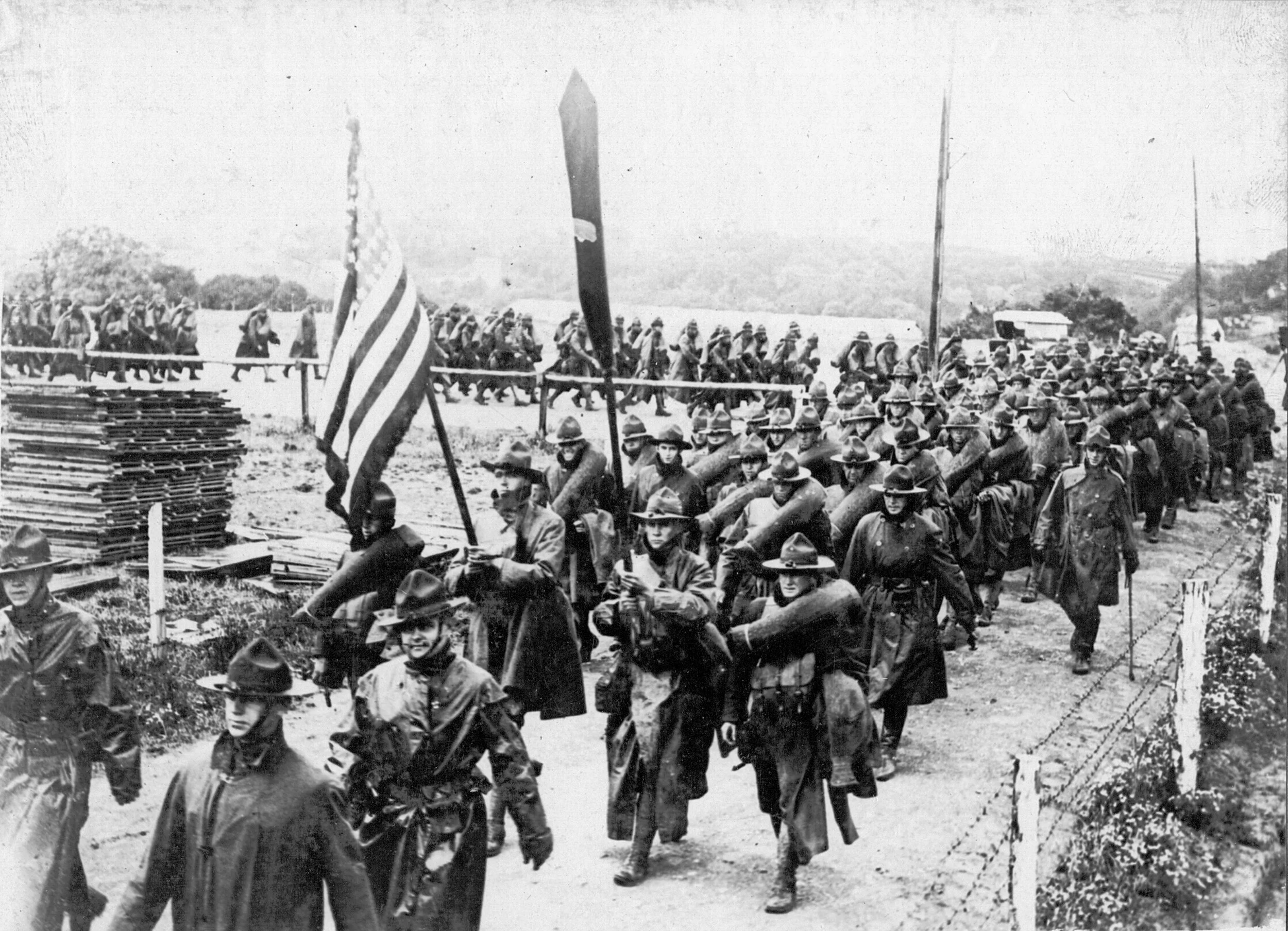
British Photographs of World War I, 1914-1918, in Records of the War Department General and Special Staffs, Record Group 165, National Archives and Records Administration, College Park, Md.